Hey, crypto enthusiasts! Welcome to DreaMot's Crypto Insights series. Today, we're diving into two topics that spark both excitement and frustration: Why did a powerhouse like Cambodia's Prince Group get its Bitcoin assets frozen by the U.S. so easily? Isn't Bitcoin supposed to be decentralized? And what's the deal with stablecoins? Why do people flock to them, and why are countries itching to issue their own? In the 2025 crypto landscape, these aren't just money matters—they're reshaping global finance. Let's break it down step by step, with real cases and data, to help you navigate the rules of this game.
1. Why was the Prince Group's Bitcoin frozen by the United States? The collision between the "myth" of decentralization and reality
In October 2024, the U.S. Treasury dropped a bombshell, freezing millions in virtual assets tied to Cambodia's Prince Group, including Bitcoin. This wasn't pocket change: The group's Huione Pay platform was labeled a hub for Asia's largest money-laundering network, linked to drug trafficking, scams, and terror financing—totaling billions. The U.S. didn't stop at freezing; it pressured global exchanges to delist related wallet addresses, halting trades for holders.
But hold up—Bitcoin's "decentralized," right? No central authority, instant global transactions, irreversible. So how the freeze? The truth: Bitcoin's decentralization is core protocol-level, but the ecosystem is riddled with centralized chokepoints. Here's the breakdown:
- Custody and Exchange Vulnerabilities: Most users don't hold private keys; they park Bitcoin on centralized exchanges (like Binance or Coinbase) or wallet services. These are regulated locally, and the U.S. can issue OFAC (Office of Foreign Assets Control) freeze orders, forcing platforms to flag and lock specific addresses. Prince Group's BTC was mostly in Huione Pay's custodial wallets—once tagged, it became toxic: touch it, get burned.
- On-Chain Tracking Tools: Decentralized ≠ anonymous. Analytics firms like Chainalysis trace flows effortlessly, linking Prince inflows to crimes. By 2025, AI-enhanced versions hit 99% accuracy. Result? Even "borderless" Bitcoin gets "soft-frozen" via middlemen pressure, mimicking hard locks.
- Lessons Learned: This saga underscores decentralization's double edge. For retail users, self-custody (via hardware like Ledger) is non-negotiable; for institutions, KYC compliance is survival. Data shows a 30% spike in global crypto freezes in 2025, driven by AML laws (e.g., U.S. Patriot Act). Prince's downfall? Just the tip— who's next?
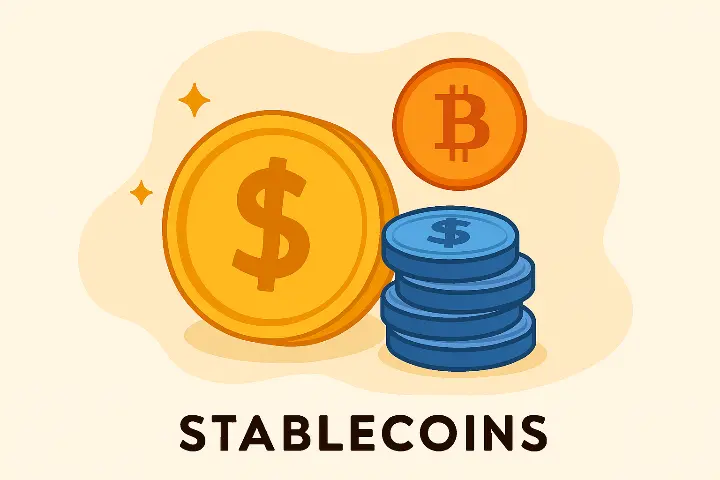
2. What is a stablecoin? Why do we need it? The motivations behind national issuance
Stablecoins sound like crypto's "stabilizer," but they're digital assets pegged to fiat (like USD) for minimal volatility. Take USDT (Tether): Each is theoretically backed 1:1 by USD reserves. As of November 2025, global stablecoin market cap tops $200B, fueling 70% of crypto trades—they're the bridge making volatile crypto "tradeable."
Why do we need them? Crypto like BTC is a rollercoaster: 2024 saw it plunge from $60K to $30K, then rebound to $70K—panic sells wipe out retail. Stablecoins fix that:
- Hedging and Liquidity: Trade with USDT to dodge swings, swapping seamlessly for alts. In DeFi, it's "digital USD" for lending/staking, yielding 5-10% APY.
- Cross-Border Lifesaver: Legacy remittances? Slow and pricey (SWIFT: 3-5 days, 2-7% fees). Stablecoins? Seconds, near-zero cost. In 2025, Africa/LatAm remittance volumes via stables surged 150%, outpacing PayPal.
Why issue national stablecoins (aka CBDCs)? It's a power play:
- Sovereignty Defense: With private giants like USDT ($110B+ cap), central banks fear USD spillover. China's e-CNY, piloted for 5 years, now covers 1.4B users by 2025—to bypass SWIFT and tighten trade reins.
- Stability and Oversight: CBDCs track every tx for AML, economic boosts (e.g., direct stimulus). EU's digital euro launches 2026 for "green finance"—tying to carbon tracking. Meanwhile, compliant privates like USDC (Circle) got U.S. nods.
Caveat: Not flawless. Tether fined $41M for opaque reserves; national ones spark privacy fears ("Big Brother watching"). Future? Hybrids—private innovation + state guardrails—might rule.
Closing: Crypto's Future, You Define It
Prince's freeze is a wake-up: Decentralization has limits; stablecoins are the bridge. But crypto's no gamble—it's a tool: Wield right, dreams soar; wrong, tears flow. At IdeaCray, we empower AI-simulated wallet risks and DeFi brainstorms. Your take: Stablecoins savior or snare?